At Internet Security Systems Inc. (ISS) they have discovered fatal flaws in web conferencing products. The one from WebEx included. It is the first flaw that they have shared publicly. They are closely working with vendors so that they could patch it already.
The WebEx flaw
This flaw that was discovered could be used to run unauthorized software on a computer. It has something to do with the ActiveX component it uses. As such, it is imperative that those who use it update the software as soon as possible. If you are one who does not have automatic updates on, you could download the patch from the WebEx site itself.
For those who use VoIP regularly and are concerned with their data, flaws in the software used must be checked and patched immediately, if there are available ones. The possibility of an attacker to run unauthorized software on your own computer is terrible. It could different things which might compromise the integrity of the data on your computer.
The idea that there are security flaws which are yet undiscovered in VoIP is something that makes some companies reluctant to adopting the technology. That is why some companies are still waiting for it to become more secure and stable. The convenience of communicating via such software would be nice. The thing is that it might be more costly to do damage control, in case the time when it is necessary. Hopefully, other flaws will surface and be patched immediately.
Tags: IT Security Basics, Operating Systems, Programming, Real-World Issues, Storage
Categories: IT Security Basics, Operating Systems, Programming, Real-World Issues, Storage
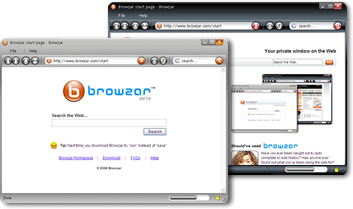
September saw the introduction of two new web browsers focusing on anonymous web browsing. Early this month, Browzar was launched by Freeserve founder, Ajaz Ahmed. It automatically deletes any cookies after each session, does not save save pages in cached folders, and its relatively small size makes it easy to bring along. There has been issues on it being merely an IE shell and that search results lead to sponsored links and adverts. Also, users need to download any security patches from Microsoft once a flaw has been identified for IE. After the two recent attacks on the browser, many are skeptical to its overall usability.
Torpack on the other hand came from Hacktivismo, a group of computer security experts and human rights workers, and is based on Mozilla’s Firefox. No installation is required to run the browser, though the two folders generated from the free download have to be kept together for it to run. This browser encrypts the data passing from the user’s computer and the TOR network, and causes the IP address seen by the website to change every few minutes. Torpack does have limitations; browsing speeds will be slower and it’s suggested not to log-in sites which cannot offer secure log-ins.
Both of these applications are not meant to replace the current browsers you’re using in your computer. It’s interesting to note that they both have privacy and secure browsing as their main selling points. These features are useful for users who are leery of going online in public access locations like schools and Internet cafĂ©s, where a secure connection cannot be guaranteed. So far both of these are available for free download, and you might want to see which one will stand the test of continuous use.
Tags: Privacy-&-Anonymity, Programming, Review
Categories: Privacy & Anonymity, Programming, Review