 If you happen to be a small or medium scale company that cannot afford multiple data stores and infinite numbers of mirrored hard drives, that becomes a problem. An encrypted hard disk in a laptop that gets banged up damaging the hard disk may still have some of the information intact enough for recovery but damage some of the vital keys and software and you are left hanging by a thread or down in the gutters. Data recovery is possible but only through expensive methods with the hard disks being opened up, the platters extracted and installed into another similar hard disk for data extraction. Only the military and federal government would have enough cash to burn in terms of data recovery at that level for the price is computed in the amount of megabytes recovered and on a per hard disk basis, and imagine a 1 terabyte drive at say $50/MB then you’d be scratching your head by now, and that’s just for a single drive.
The risks of identity theft and information leakage is real but the technology is still quite prone to failure even with today’s quad-core which is why we didn’t discuss the performance issue in the discussion. Today’s multi-core processors are capable of handling complex tasks such as real time encryption and decryption as if there was nothing happening on the background. The performance issue has been addressed by more powerful microprocessors but the reliability of the hard disks which stores the information and even the CD’s are still quite weak. Till there is more definite proof that all parts of the computer has reached such a reliable level that failure is a less of a factor more people would still retain their own proprietary security measures (birthday passwords, flash thumb drives that always get lost and physically carrying their discs with them).
Encryption – Why people shun away from it even now? (Part 1)
 Encryption used to be the mainstay of military and other government agencies who need to secure the information they handled preventing anybody who may get access rendering the information useless. Everybody knows about it yet not many use it for the protection of their vital information stores, why? Well there are a hundred reasons why people mistrusts such an extreme measure as encrypting data and one is reliability of technology on which it is used on. Computers as we know have become cheaper and cheaper that has been good on one side but it also raises the risk of failure due to cheaper parts and higher risk for data loss due to failure. I know a lot of people would be going against me on this one but if you have experienced a hard disk crash during my many years of computer use and association with them in my previous line of work as a technical support supervisor, you’d know what I mean.
The technology we have today is of the highest level of quality and technological complexity of the computers I started to work with (386’s and 486’s) but the robustness of these gadgets and gizmos we call peripherals are still quite low except for the extreme types that are too expensive for the ordinary user to afford. Imagine a failed motherboard that has fried circuits, no problem for the hard disks are seldom affected by such incidents. Get the board out and swap it out and you connect the hard disk and you have your data available. Imagine you have a failure in the hard drive itself; you get some software and try to recover that information hoping you get enough of the sensitive files your boss needs in the morning. Now, imagine having a hard disk that was encrypted and had some of its sectors rendered useless, now that’s a nightmare for the encrypted data is useless with the key and the code stored into the hard disk itself.
Government Laptops and Computers get encrypted
 Due to the recent problems associated with the loss of government laptops and security breaches such as the incident where the laptop of a Federal Trade Official was reported to have been compromised by reportedly Chinese operatives while on a trip overseas, the US Federal government has begun to encrypt their laptops in hopes of bolstering their security to prevent such security risks in the future. Let us just hope that they do it fast enough for no one wants to get their personal and financial information released online or obtained by enemies of the state (terrorists in layman’s terms). Of the estimated 2 million laptops the US government and the many agencies have, only 800,000 have had the encryption system developed by the Department of Defense and the General Services Administration.
Encryption is one of the most secure way pf keeping data safe from unauthorized access which renders them useless without the proper software or security keys. Comparable to the dial combination on a bank vault, the encryption process turns files onto a useless bundle of information that cannot be read or used for other purposes.
All this effort to boost security of information that is gathered and collated by the various agencies and even private businesses that have ties with the government though contracts have had their computers encrypted to ensure the information they handle and use stays secure and out of the hands of criminals who aim to use them against the government.
Paypal Boosts security
 In efforts to boost security, Paypal, one of the premier internet online payment providers is moving to block users who use older browsers to prevent weaknesses that these browsers possess. They have found that many users online still use old Microsoft IE 3.0 and 4.0 which have ended their support life a long time ago hence they do not have the needed updated security updates that are necessary to conduct safe and secure online transactions with regards to payments and other related business. Paypal has had a lot of bad publicity with regards to phishing and infiltration where people intercept and go on fake bidding sprees just to get at the vital financial information that people usually share over the network. In hopes of boosting security, they will be using script detection to begin blocking users and that they do apologize for all the inconvenience this may cause the millions of users who may be affected by their move. This comes as the amount of identity theft and other crimes have increasingly entered their ranks ending in much stolen information that leads to credit card fraud. Being the biggest, they are the most viable target for such hackers and they are trying to boost security on that front of the deal.
This would hopefully prevent more cases from developing and that any new ones will be ‘nipped in the bud’ so to speak.
Paypal and eBay have offered select users with a distinct security keys using VeriSign passwords that is to be transmitted during payment transactions which aims to prevent interception of the transaction information as it travels through the internet. Unlike specific credit card transactions that travel through dedicated lines which are now slowly being protected by PCI-DSS for improved security, regular PC do not have that much security hardware installed to protect them from interception by hackers who could tap into the network getting all credit card information for illegal purchases.
Economics – the driving force of Mobile Spying Malware
 Experts have said it again and again and history has shown us that money is the root of all evil and so it goes the same for the development and eventual spread of more sophisticated malware intended for the ever growing mobile computing environment. Current malware is simple yet experts are warning users and other experts alike that it would only be time before some hacker develops a more robust and discreet form of malware that would circumvent standard virus scanners. As we have seen and read in news articles, these viruses, Trojans and other forms of malware are evolving so fast that removal and detection experts are finding it very hard to get one step ahead of them. In the time it takes to read this post, about 35 or so new types of malware would have been released into the wild to infect any of the millions of unprotected systems over the internet. The problem has gone into the pandemic stage that no system is safe for long. The soonest a new and more robust intrusion prevention and security system is in place, several new vulnerabilities in the computer systems we use are found and immediately exploited by hackers and their minion.
Economics or the promise of earning a buck from such malware creation and spreading is the major motivation for hackers. Say you get into the cell phone of your favorite Celebrity and get hold of private pictures, or get hold of a confidential report which lists the amount of funds along with the corresponding account information and much more information that one can sell quite profitably over the internet.
Confidential UK Home Office Disk Found in Laptop Bought from eBay
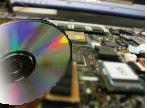 In another addition to the UK government’s growing list of information security blunders, a data CD which was found labeled as coming form the UK Government’s Home Office Branch, was found lodged inside a laptop bought over the internet from eBay. Yes, bought online which at first was kind of funny for the laptop engineers who handled the device after it was brought in by a customer for repairs. The un-named customer apparently won the online bidding for the laptop and took it for repair to Leapfrog computers for repairs. The technicians found the disk crammed in between the keyboard panel and the main board and thought of it trivially till they read the words, “Home Office Confidential”. The seriousness of the situation arose when technicians found the laptop hard drive and the disk itself to be encrypted rendering the information stored within it un-readable. They immediately called the police which dispatched anti-terrorism units to recover the government laptop and took it to the Greater Manchester Police Headquarters for safe keeping.
These types of incidents are not unusual which began last year when on Nov 20, 25 million people and 7.2 million families had gone missing which had information such as names, addresses, dates of birth, child benefit numbers, national insurance numbers and bank and social security details. The Department of the Environment on the 11th of December, lost two computer disks containing names and addresses of 7,685 learner Northern Ireland motorists. On the same day, confidential information regarding dozens of prisoners/inmates released to private businesses. On Dec 11, a company union claimed that personal information of hundreds of members were sent to four companies by health authority employers. Unite said Sefton Primary Care Trust released data including names, dates of birth, salary, pension and national insurance numbers of 1,800 employees. On Dec 18, records of 3 million learner drivers’ information were lost when a hard disk which was sent to the US for maintenance was lost during processing. The HM Revenue and Customs Service lost 6,500 customers of private pension firms were lost contained within a computer cartridge. The NHS trust, lost patient information of 168,000 people and lastly, the Police records from Devon and Cornwall were found in a dump by a man looking for spare parts for computers who was going through scrap equipment.
Such incidents are alarming and very dangerous for some of the lost information were not even encrypted. The one they found within the laptop was encrypted but given time, a computer expert with no good intentions could theoretically have broken the code exposing sensitive information into the unknown. These are some of the ones that are publicly known and as it shows, the UK Government might want to shore up it’s strategy of safeguarding information for the public and it’s own sake.