 In efforts to boost security, Paypal, one of the premier internet online payment providers is moving to block users who use older browsers to prevent weaknesses that these browsers possess. They have found that many users online still use old Microsoft IE 3.0 and 4.0 which have ended their support life a long time ago hence they do not have the needed updated security updates that are necessary to conduct safe and secure online transactions with regards to payments and other related business. Paypal has had a lot of bad publicity with regards to phishing and infiltration where people intercept and go on fake bidding sprees just to get at the vital financial information that people usually share over the network. In hopes of boosting security, they will be using script detection to begin blocking users and that they do apologize for all the inconvenience this may cause the millions of users who may be affected by their move. This comes as the amount of identity theft and other crimes have increasingly entered their ranks ending in much stolen information that leads to credit card fraud. Being the biggest, they are the most viable target for such hackers and they are trying to boost security on that front of the deal.
This would hopefully prevent more cases from developing and that any new ones will be ‘nipped in the bud’ so to speak.
Paypal and eBay have offered select users with a distinct security keys using VeriSign passwords that is to be transmitted during payment transactions which aims to prevent interception of the transaction information as it travels through the internet. Unlike specific credit card transactions that travel through dedicated lines which are now slowly being protected by PCI-DSS for improved security, regular PC do not have that much security hardware installed to protect them from interception by hackers who could tap into the network getting all credit card information for illegal purchases.
Archives for April 2008
Social Networks – Keep the bad guys out!
 In the UK, identified sex offenders are facing bans from social networking sites which is to boost the reliability and security of having these social networksUK where surveillance has become a part of everyday life, with CCTV systems and all types of other video surveillance abound that may be possible with current facial recognition techniques that can scan a person’s face from any angle allowing identification without that person in question even knowing about it.
The intent is quite good but just how will these social web sites go about identifying sexual offenders is a very tough task indeed. With millions of registered users that span the globe along with the hundreds of social networking sites that may be next to impossible. Don’t expect these people to enter their true identity for that is the first thing they would make them most identifiable. To invent some form of technology that would brand them as such would be better and can indeed make the internet a safer place for all of us including your kids who are often the victims of such criminals.
Sans Institute – Gotcha!
 The Sans Institute has identified and determined the source of infections to some 20,000 web sites since January through research and extensive review of web sites and how they work. They have identified the point of entry for these attacks which capitalizes on a sneaky tool that uses Google’s search engine as it searches for specific types of vulnerable applications. They have also found that the process is automated, meaning they were not “live” attacks which has a user on the other end initiating it. The search tool works by finding vulnerable software and then executes a simple SQL statement that injects a script tag onto the discovered site. The exploit was designed to target Microsoft Window’s ISS which once infected, has the ability to infect all who visit the site. The sad side is that again, the malware is found and has been traced to report back to China which enforces more need for security on their side of the globe.
Their people were so thrilled at the discovery which they called a “GEM” due to the scarcity of such discoveries in the wild (internet). Discovery of such Trojans and other malware allows prompt response and sending out of updated signatures to anti-virus software and other intrusion prevention tools that prevents the spread to continue. They may have been lucky this time for the majority of malware out in the wild are not only very complex in terms of coding but have the ability to morph into totally different forms as they travel from computer to computer through the internet. The best way to avoid such problems would be to stay off the internet, which is next to impossible due to the current prevalence of the said technology in our everyday lives.
Pro-Chinese groups call of CNN Website attack
 CNN, one of the US’s biggest media giants has been threatened by pro-Chinese activists as a target for attacks due to their unjust coverage of issues that concern the motherland (China). CNN International the web site, indeed suffered some form of DoS attacks which lasted 20 minutes but was halted due to unknown reasons. CNN has been criticized as too critical of the way the Chinese has handled the events in Tibet and that people are mad with their so-called one sided reports. The events in Tibet were hidden from the rest of the world when the Chinese cut off all internet connections and banned Western reporters from entering the area. Anyone caught within the exclusion zone were hastily sent out of the country in efforts to control the information that gets out of the territory which is moving for independence from China’s communist ways. Reporters were however allowed in only with strict government supervision.
The group claims to represent a majority of the Chinese public who have expressed disgust at how Western Media have been harassing China over issues that spans the whole country, from Tibet to the prevalence of piracy in all forms and shapes, China has managed to top all lists that lists it as haven for the top Hacker’s of the world, tainted goods and many more.
The attack on CNN was called off due to the news getting out and any attack could then be stopped. The exploratory attack did manage to impede access to users of CNN interactive but for the rest of the Western world there was no significant slowdown noticed. These kinds of attacks as well as others that have been targeted at many governments China have called as enemies of the state are commonplace, mostly being detected and dealt with promptly. There were repeated attacks on the Department Of Finance’s web site where identified hackers from China (where they were traced), and the US’s department of Homeland security has repeatedly called for the government to do something about such attacks. Many other such attacks that are aimed towards US firms have been found and discovered which raises the question wether the battlefield has moved into cyberspace not on the ground.
Chinese Crackdown on Hackers
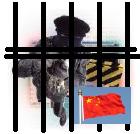 In efforts to boost their commitment to promoting better IT security, China has passed sentence on four hackers that were due to receive sentences ranging from two to eight years in prison. The four un-named cyber-criminals were given sentences of two and a half years which if one spends in a Chinese jail would be too long enough. They were however convicted not of cyber-crimes yet for “non-declaration of Income” which seems to overshadow their claims of boosting IT security measures. The convicted cyber-criminals were caught to have gained around a few thousand dollars of undeclared income which they got from information gathered through malware. China has repeatedly challenged allegations that they are the hacking capital of the world stating that they are victims instead of criminals in the IT Security scene. Their crackdown on Tibetan activists and supporters has again raised questions on the globalization policy of China as a country that is open for change in order to face the challenge of globalization.
The move is one of the many much publicized efforts by Chinese Authorities who say are doing all they can to stop the illegal activities that are happening within their borders. Their passing of the anti-hacking measures is seen as the harshest in the world and as said, the conditions in Chinese jails if taken into consideration would be too long for any length of time. They have tried hard to control the internet, by banning sites blocking access to external sites before they get to millions of Chinese users. People are suspicious of their motives for they emphasize more on the internal issues they have rather than those in conjunction with global matters such as the need for more intrusion prevention methods to prevent hackers from doing damage to all of us.
Other News
Heavyweight Windows – Imploding?? (Part 2)
 Imagine having a form of windows that would run on the first versions of the P4 Intel Chip or on a Celeron, or the newer EEE’s and Ultraportables, wouldn’t that be a greener proposition than having to send tons upon tons of old computers to the recycling center (chips, computer chips are one of the most polluting products on earth due to the strict environment controls and exotic materials that are used in making them. The bad thing is that they’re so well made, recycling them to recover the precious metals can only be done through incineration to vaporize most of the packaging just to get to that precious couple of milligrams of silicon, lead or gold (plus many other exotic stuff they now use on these microprocessors).
Microsoft might still have it’s place in one of the most used Operating Systems but it’s time surely is numbered if they fail to follow suit on the open-system bandwagon which can have a basic web-server running on an old Pentium systems up and running in no time. Vista’s a flop (no doubt about it) and the announcement of a new OS from the software giant has put off more from shifting (even with the announcement of the mandatory phase-out of the selling of new machines bundled with XP). The genius of Bill might be needed (even though he has left the helm of the company again to come up with some concoction that would maintain the company’s grip on the industry it has so benefited from. “You see that light flashing in the corner of your eye? That’s your retirement light, and it’s flashing a bit faster every day)!!”